
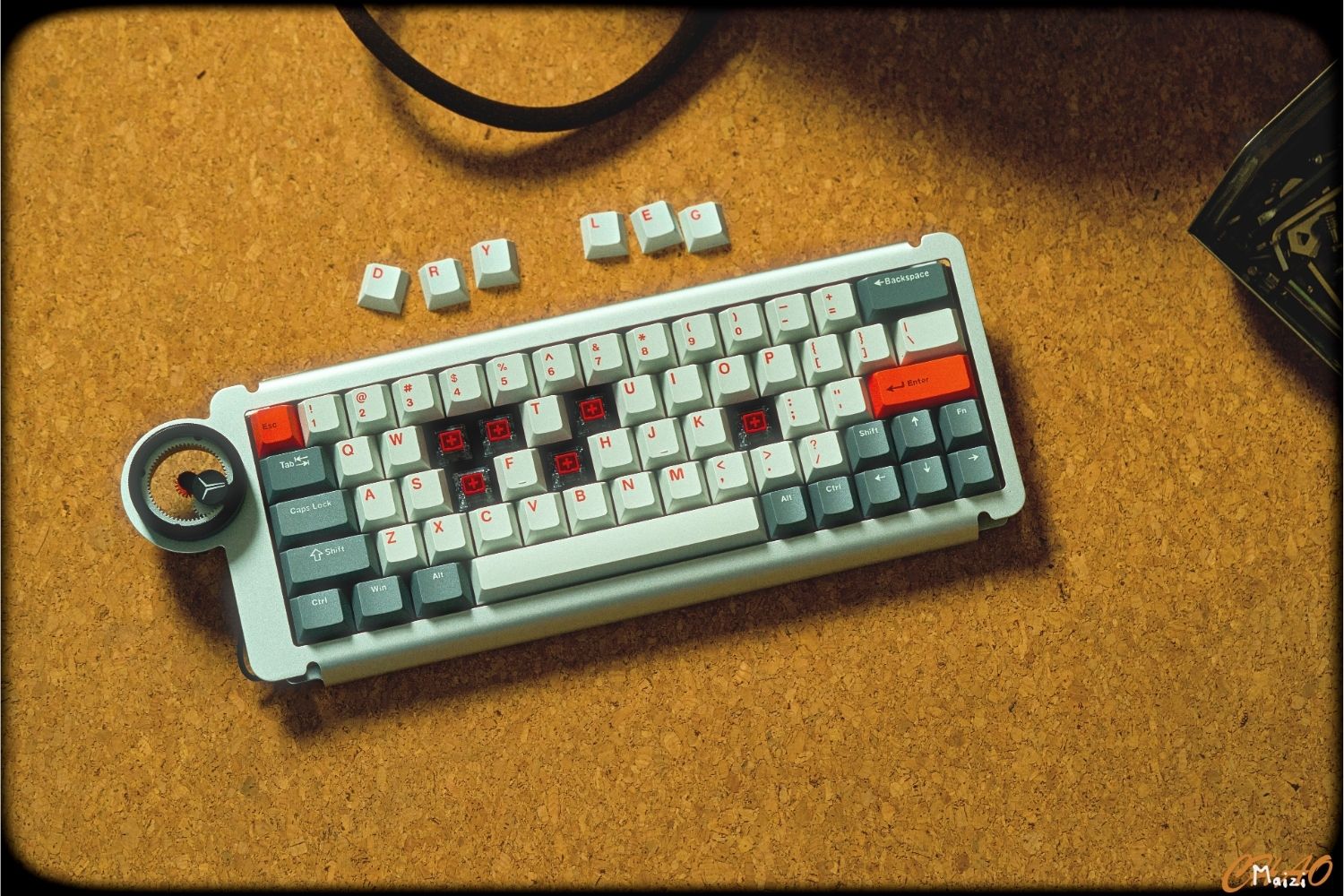
Hello everyone, this is Part 2 of our ice ring 63 RT series, covering what makes our magnetic switch implementation genuinely different.
In Part 1 we covered why we built the ice ring 63 RT — a full-metal, compact, portable magnetic keyboard designed around three key needs from our community. Here, we go deeper into the performance side: RT accuracy, temperature stability, switch hardware, and polling rate.
Accurate, Stable and Long-Lasting RT 0.01
When it comes to magnetic keyboards, performance is everything. We spent considerable time fine-tuning our setup to guarantee maximum in-game performance from the ice ring 63 RT.
The result: a consistent RT accuracy of 0.01mm, zero ghosting, and zero deadzone — at all times. For FPS players, this is the difference between a registered counter-strafe and a missed input.
Even for casual gamers, the precision makes counter-strafing effortless — an advantage that borders on unfair.
Hardware-Level Temperature Drift Control
Temperature drift is one of the most common problems with magnetic keyboards under extended use. As the PCB heats up, the Hall effect sensor loses accuracy — and RT performance degrades.
Software compensation is the industry's standard workaround. The ice ring 63 RT uses that too, but goes further with three hardware-level solutions:
1. Open inner assembly design Unobstructed airflow in all four directions ensures maximum heat dissipation efficiency across the entire PCB.


2. Nano-coated PCB A waterproof and anti-static nano coating allows the open assembly design to remain fully protected — the best of both open and closed configurations.

3. Metal bottom cover with cut-outs A purpose-built metal heatsink bottom cover channels heat away from the Hall effect sensor directly.

During testing, the ice ring 63 RT maintained RT 0.01mm accuracy after 60 hours of continuous gaming.
TTC King of Magnetic Switches
We partnered with TTC to equip the ice ring 63 RT with TTC KOM switches — designed specifically to combine top-tier gaming performance with per-user customization.
The dust-proof stem improves stability and durability. The longer spring gives every keypress a snappy, responsive rebound. And the swappable stem design means the switch can be tailored to individual preferences.

| Spec | Detail |
|---|---|
| Switch Type | Linear |
| RT Accuracy | 0.01mm |
| Initial Force | 35 ± 5gf |
| Initial Magnetic Flux | 90 ± 15Gs (1.6mm PCB) |
| Final Magnetic Flux | 480 ± 60Gs (1.6mm PCB) |
| Total Travel | 3.5 ± 0.2mm |
| Pre-Travel | User defined |
| Sound Profile | Relatively loud |
8K Polling Rate · 16K Scan Rate · 0.125ms Latency
The ice ring 63 RT runs on a flagship-level controller: 8K polling rate, 16K scan rate per second, and a key delay as low as 0.125ms. Every input is captured and transmitted with pinpoint precision — even the most subtle movements register instantly.
What's the Planetary Gearset Actually For?
Curious about that knob? Read Part 3: Planetary Gearset to find out exactly what it does and how it was designed.
Part 1: Dry Studio ice ring 63 RT: Why Anger Miao Made it?
Part 2: ice ring 63 RT: Next-Level Magnetic Gaming Keyboard
Part 3: ice ring 63 RT: Planetary Gearset
Part 4: ice ring 63 RT: Coming April 14

WRITTEN BY
Angry Miao
Gaming Mouse Specialist • Angry Miao Editorial Team
-
-
-
-
More articlesShare:
Dry Studio ice ring 63 RT: Why Anger Miao Made it?
Mechanical Keyboard Switch Types: How to Choose?