
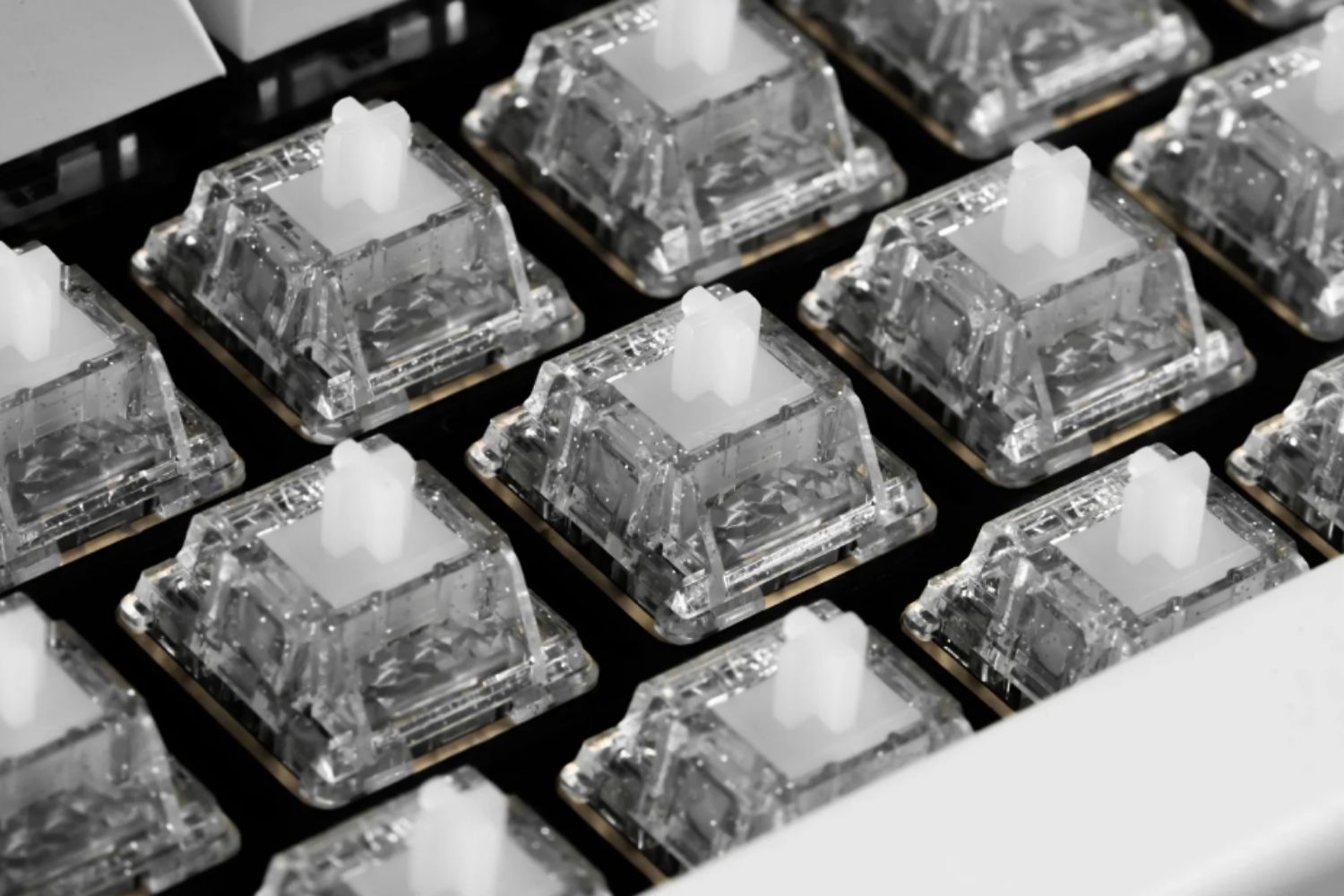
Lubed switches can make a mechanical keyboard feel smoother, quieter, and more refined. The harder question is whether to choose factory lubed switches or spend time hand lubing them yourself. Factory lubed switches are easier and more practical. Hand lubed switches offer more control over sound, smoothness, and customization.
What Does “Lubed Switch” Mean?
A lubed switch is part of the broader keyboard switches conversation because the switch structure decides where lube matters. The goal is to reduce friction as the stem moves through the housing and the spring compresses. When done well, lubrication can make typing smoother and reduce scratchiness, spring ping, and sharp plastic noise.
What Parts of a Switch Are Lubed?
The most common areas are the stem rails, spring, and bottom housing contact points. Linear switches are often lubed more fully because there is no tactile bump to preserve. Tactile switches need more caution because too much lube can weaken the bump. Clicky switches are handled carefully because lube can mute the click.
Why Lubing Matters for Feel and Sound
Lubing matters because small friction points inside a switch can affect every keystroke. A dry switch may feel scratchy or sound thin, while a properly lubed switch can feel smoother and produce a cleaner, deeper sound. It does not automatically make every switch better, though. Too much lube can make a switch feel heavy, slow, or mushy.
Factory Lubed Switches Explained
Factory lubed switches are lubricated during production before they reach the user. In a well-built mechanical keyboard, good stock tuning can make the board feel smoother and more polished from the first keypress. The exact quality still depends on the manufacturer, switch design, and lubrication control.

Pros of Factory Lubed Switches
The biggest advantage is convenience. You can install the switches and start typing immediately. Factory lubed switches are beginner-friendly because they do not require a switch opener, brush, lubricant, or hours of work. Good factory lube can feel smooth enough for most users, especially compared with dry switches.
Cons of Factory Lubed Switches
The limitation is control. You cannot choose the lubricant type, amount, or exact application points. Some factory lubed switches may still feel uneven, with certain keys sounding different. If you are chasing a very specific creamy, deep, or muted sound profile, factory lubrication may not get you all the way there.
Hand Lubed Switches Explained
Hand lubed switches are opened and lubricated one by one by the user, a keyboard builder, or a modding service. This gives much more control over how each switch feels and sounds. It is one of the most common modifications for mechanical keyboards because it directly changes the typing experience.
Pros of Hand Lubed Switches
Hand lubing gives you the most control. You can decide how much lube to apply to the spring, stem rails, housing, and contact points. You can tune for a lighter feel, smoother travel, or a deeper sound. It is especially useful for enthusiasts who want a custom build to feel more polished than a standard keyboard.
Cons of Hand Lubed Switches
The downside is time and consistency. Lubing 70 to 100 switches can take several hours, and the result depends on technique. Over-lubing can feel sluggish, while under-lubing may leave scratchiness. Beginners may also damage switch clips or weaken tactile feel by lubing the wrong area.
Factory Lubed vs Hand Lubed Switches: Key Differences
The main difference is not simply “better or worse.” If you are comparing smoother keyboard switches for a better typing feel, factory lube gives you convenience and repeatability, while hand lube gives you more control for a hands-on custom build.
|
Feature |
Factory Lubed Switches |
Hand Lubed Switches |
|
Convenience |
Ready to use out of the box |
Requires tools, time, and patience |
|
Smoothness |
Good enough for most users |
Can be smoother if done carefully |
|
Sound Control |
Limited by manufacturer tuning |
Highly customizable |
|
Consistency |
Usually consistent across batches |
Depends on skill and technique |
|
Cost |
Included in the switch price |
Requires lube, tools, and extra time |
|
Best For |
Beginners and practical users |
Enthusiasts and custom builders |
Which One Feels Better?
Hand lubed switches can feel better than factory lubed switches if the work is done carefully. The key word is “can.” A skilled builder can create smoother, more consistent travel, but a poor hand-lubing job can feel worse than a good factory-lubed switch. For most users, factory lubed switches are already smooth enough.
Which One Sounds Better?
Hand lubing gives more control over sound, but switch sound also depends on the case, plate, keycaps, foam, stabilizers, and desk surface. In a broader mechanical keyboard and PC setup, switch lube helps, but it is only one part of the full typing experience.
How Different Switch Types Affect the Result
The best lubing method depends on switch type. Understanding different keyboard switches makes it easier to predict which switches will sound cleaner, feel smoother, or lose too much character after lubing.

Linear Switches
Linear switches usually benefit the most from lubrication. Because there is no tactile bump, you can lube the stem rails and housing contact points more freely. A well-lubed linear switch often feels smoother, sounds deeper, and loses much of the scratchiness found in dry switches.
Tactile Switches
Tactile switches need a lighter touch. Lubing the rails can improve smoothness, but lubing the tactile legs too heavily can reduce the bump that makes the switch feel tactile in the first place. For beginners, factory lubed tactile switches may be the safer choice.
Clicky Switches
Clicky switches are usually the least common choice for heavy lubing. Their main feature is the crisp click, and too much lube can dampen or distort that sound. Some users lightly lube springs to reduce ping, but full hand lubing may not be worth it if you want to preserve the original click.
Is Hand Lubing Worth the Time?
Hand lubing is worth it if you enjoy keyboard tuning and care about small differences in feel and sound. It is less worth it if you simply want a smooth keyboard for daily typing. For many users, a well-made factory lubed switch offers the best balance between quality and effort.
When the Extra Effort Makes Sense
Hand lubing makes sense for custom builds, especially when you want a smoother, cleaner linear feel from premium switches such as Icy Silver Pro V3 Switches. It is also useful when factory lube feels uneven or spring ping is noticeable.

When Factory Lubed Is Good Enough
Factory lubed is good enough if you want a keyboard that feels smooth without extra work. It is also the better choice for a first mechanical keyboard, an office setup, or anyone who does not want to buy tools and spend hours opening switches.
How to Hand Lube Switches Safely
You do not need a full workshop to hand lube switches, but you do need patience and a clean setup. Start with a few switches before lubing an entire set, especially if your keyboard supports hot-swap customization, so you can test your technique first.
Tools You Need
Basic keyboard accessories for this job include a switch opener, switch puller, small brush, tweezers, and lubricant. Krytox 205g0 is commonly used for linear switch stems and housings, while GPL 105 oil is often used for springs. Optional switch films can reduce housing wobble, but they are not necessary for every switch.
Basic Steps
Remove the switch, open it, and separate the stem, spring, top housing, and bottom housing. Lightly lube the spring, then apply a thin coat to the stem rails and housing contact points. Reassemble the switch and test it before moving on to the rest of the batch.
Common Mistakes to Avoid
The most common mistake is using too much lubricant. A visible clump is usually too much. Other mistakes include lubing tactile legs too heavily, forgetting switch orientation, rushing through the batch, or changing methods halfway through and making the switches feel inconsistent.
Which Should You Choose?
There is no single winner for everyone. Factory lubed switches are better for convenience, while hand lubed switches are better for control. Your choice should still depend on patience, typing expectations, and how much you enjoy keyboard modification.
Choose Factory Lubed Switches If
Choose factory lubed switches if you want a smoother typing experience without extra tools or time. They are ideal for beginners, office users, and anyone who wants reliable sound and feel.
Choose Hand Lubed Switches If
Choose hand lubed switches if you want to fine-tune the typing feel, sound, and spring noise yourself. They are best for enthusiasts who enjoy modding and are willing to trade time for control. The result can be excellent with careful, consistent technique.
Final Thoughts
Factory lubed switches are the better choice for most people because they are convenient, affordable, and smooth enough for daily use. Hand lubed switches are better for enthusiasts who want maximum control over every keypress. If you are new to mechanical keyboards, start with factory lubed switches first. If you later want a more personalized sound, hand lubing is worth exploring.
FAQ
Is It Worth Lubing Factory Lubed Switches?
It is worth lubing factory lubed switches if the stock lube feels uneven, scratchy, or too light for your preference. If the switches already feel smooth and consistent, opening every switch may not add much value. Test a few switches first before relubing the whole set.
Are Lubed Switches Better Than Unlubed?
Lubed switches are usually better if you want a smoother feel, less scratchiness, and a cleaner sound. However, “better” depends on the switch and the lubing quality. A well-lubed switch can feel more refined, while an over-lubed switch may feel slow or mushy.
What Is the Best Lubricant for Switches?
Krytox 205g0 is one of the most common choices for linear switch stems and housings because it creates a smooth, controlled feel. Thinner lubricants or oils can work better for springs or lighter applications. The best lube depends on switch type and the feel you want.
Can You Use WD40 to Lube Switches?
No, WD40 is not recommended for mechanical keyboard switches. It is not designed for precise plastic switch parts and can leave residue, damage feel, or create long-term problems. Use keyboard-safe lubricants such as Krytox, Tribosys, or spring oil instead.
Does Lubing Switches Make It Sound Deeper?
Lubing switches can make the sound deeper by reducing scratch, spring ping, and sharp plastic contact noise. The change is usually most noticeable on linear switches. Still, the final sound also depends on the case, plate, keycaps, foam, stabilizers, and desk surface.


WRITTEN BY
Angry Miao
Gaming Mouse Specialist • Angry Miao Editorial Team
-
-
-
-
More articlesShare:
The Best Mouse For Work of 2026: Tested Picks for Comfort
Five Months In: AM INFINITY MOUSE .97 Arrives on Amazon